
Your contact form needs fixing and your plugins need updating. You ask for three quotes and get €90, €450 and €1,200. Your first thought: one of them is trying to rip you off. Usually none of them is. They are simply three different offers that happen to go by the same name.
This article looks at how much a webmaster costs in France: how they charge, what the market rates are right now, what should be in a devis (a written quote) and how to compare offers so that you pay for the work, not for a number that looks good. What it costs to build a website from scratch is covered in a separate article, How much should a business website cost. Here we are talking about someone who works on a site that already exists.
Four ways webmasters charge
A webmaster, like any freelancer, sells their time. Only the packaging changes.

Hourly rate
You pay for the hours actually spent. Fair for small, unpredictable jobs. The downside: you don’t know the total in advance. Always agree on a cap: “no more than three hours without checking with me first”.

Day rate (TJM)
TJM (taux journalier moyen, literally “average daily rate”) is what French freelancers call the price of one working day. It is mostly used for large projects and for work where a freelancer joins the client’s team for several days. For the owner of a small website it is more of a benchmark: divide the TJM by 7 hours and you get a rough hourly price.

Fixed price per job
The price is known upfront: “site migration”, “email setup”. The freelancer carries the risk of underestimating the work. It only works if the job is described precisely. Anything not in the description becomes an extra.

Maintenance plan
A monthly fee for keeping the site in good shape: updates, backups, form checks, small edits. Worth it when jobs come up regularly. Check what is included, how much time is set aside for edits and how to cancel.
How much a webmaster costs: market rates
There are few public figures, and the best known come from freelance platforms. Here is what two major French platforms were showing in summer 2026.
| Source | Average day rate | Roughly per hour |
|---|---|---|
| Codeur.com, webmasters, July 2026 figures | about €130 | about €19 (the platform’s own calculation) |
| Malt, 2026 barometer, “webmaster / intégrateur” category, as reported by LearnThings, July 2026 | about €470 | about €65-70 (my conversion, assuming a 7-hour day) |
The Malt figure is three and a half times higher, and that is normal. The platforms work differently. On Codeur, the client posts a job and gets dozens of replies, many of them from beginners, and some from freelancers in other countries. On Malt, freelancers set their own rate on their profile, and experienced specialists are more visible there. So these are two different shelves in the same shop rather than an inflated price and an honest one.
Treat these figures as a benchmark, not a standard. The platforms don’t explain in detail how they calculate the average, and the rate on a profile does not always match what the freelancer actually invoices. The Malt figure comes from a second-hand report, because the barometer itself is behind a login. And most importantly, an hourly rate tells you little about the price of a job. A cheap rate over many hours can easily cost more than an expensive rate over a few.
What you are actually paying for
The client sees five minutes of work: the form is sending emails again. But a carefully done “small” job almost always has five parts.
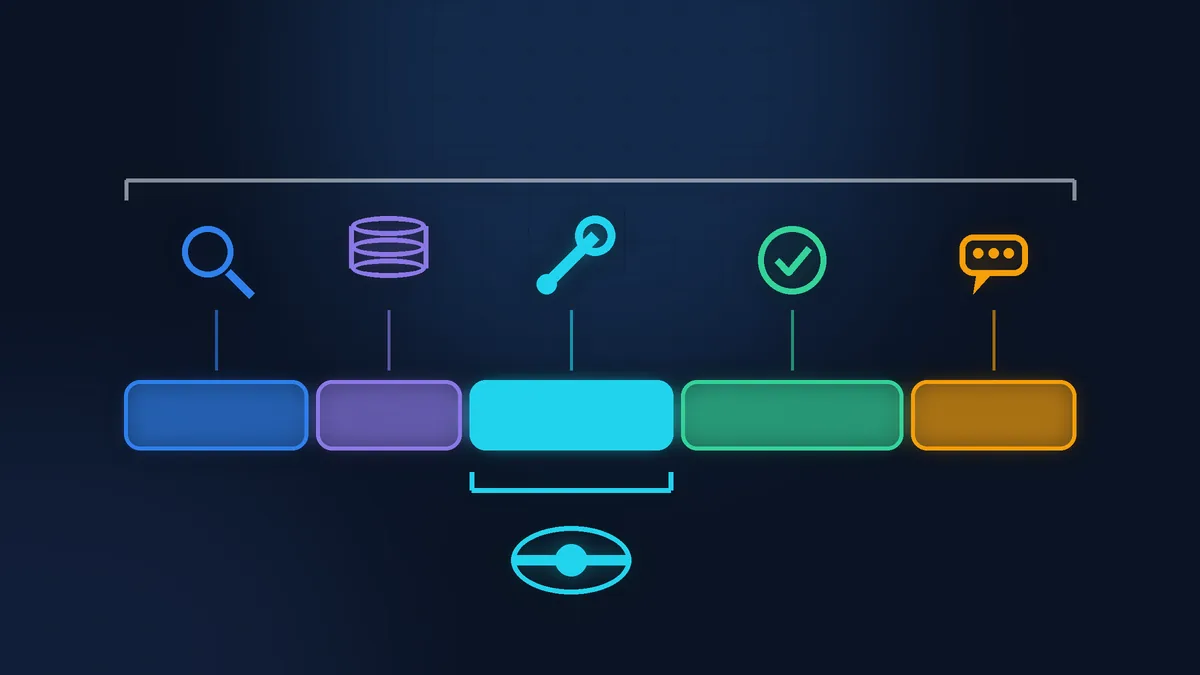
- Investigate. Find the cause, not the symptom. A form can go silent because of a plugin, the server’s mail setup or a spam filter.
- Back up. Before any change. Without one, a mistake sometimes can’t be undone.
- Fix. This is the part you see.
- Test. On a phone and a computer, in every language of the site, with a real form submission.
- Report. What was wrong, what was done, what to keep an eye on.
A €90 quote and a €450 quote often differ precisely in steps 1, 2, 4 and 5. The first is done quickly, on the assumption that everything will go smoothly; the second is done so that you don’t have to call back a week later.
And €1,200 usually means the quote includes more than you asked for: a theme update, a migration or several months of maintenance. That is not necessarily bad, but it is a different job, and you can’t compare it with the first two.
What the price depends on
- The state of the site. An up-to-date WordPress install and a site that hasn’t been updated for five years are different jobs, even if the request sounds the same.
- The platform. WordPress is the most common, and there are more specialists for it. An online shop or custom-built code usually costs more.
- Urgency. Work in the evening or at weekends almost always costs more.
- Access. If you have your hosting and domain logins to hand, that saves hours. If they have to be recovered, that is work too.
- Aftercare. A guarantee on the fix, answers to your questions a week later, a follow-up check.
What a devis should include
For web work, French law generally does not require a devis: it is only mandatory in certain sectors, such as building repairs, removals or home services (service-public, in French). But a quote is your best protection: once signed, it records what you agreed. I am not a lawyer, so this is only the practical side, without the legal fine print. What to check in a quote:
- who the provider is: name or company name, address, SIRET number (the French business registration number);
- an itemised list of work, not a single line saying “website maintenance”;
- what is not included: this matters as much as what is;
- the price excl. VAT (HT) and incl. VAT (TTC). If the provider is exempt from VAT under the French small-business scheme (franchise en base de TVA), the quote will say “TVA non applicable, article 293 B du CGI” instead, and no VAT is added on top. This note is mandatory on invoices (service-public, in French);
- the completion time and how long the quote is valid;
- payment terms: deposit, balance, payment method;
- what happens if the job turns out to be bigger: work stops until you agree, or extra hours are billed;
- who keeps the logins and files once the work is done.
How to read the offer itself and what to ask before you pay is covered in How to read a website quote.
How to compare three quotes
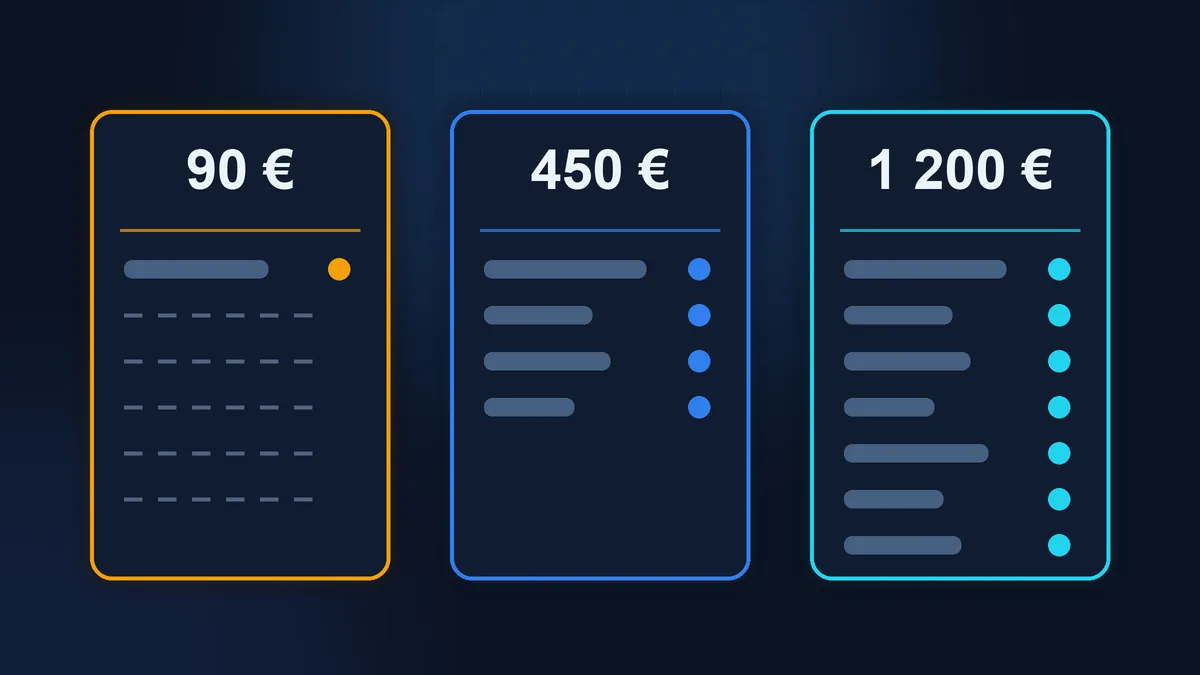
Put the quotes side by side and make them comparable. List every item from the most detailed quote in a column and tick the ones that appear in the other two. Where a line is missing, ask directly: “Is this included?” If the answer is “of course, that goes without saying”, ask for it to be written into the quote.
Then compare the hours. If one quote says 2 hours and another says 8 for the same job, one of the freelancers has either underestimated the work or overestimated it. Ask both how they arrived at their estimate. A good specialist will explain without taking offence.
Finally, ask what happens if a problem comes up along the way. The answer “I’ll stop and check with you” is worth more than the lowest rate.
What Zen Webmaster charges
I am not paid for knowing something you don’t. I am paid for the time you don’t spend on your website, and for solutions that won’t need redoing. My prices are public, and everything above applies to any provider, me included.
| Format | Price |
|---|---|
| Small edit or basic diagnosis | from €30 excl. VAT |
| One-off WordPress job (updates, forms, plugins) | from €60 excl. VAT |
| Starter consultation: one hour with a written summary, deducted from the price of the work if you order within 7 days | from €49 excl. VAT |
| Zen Base maintenance | from €79 excl. VAT per month |
| Zen Business maintenance | from €149 excl. VAT per month |
| Zen E-commerce maintenance | from €199 excl. VAT per month |
| Urgent work outside business hours | +50% surcharge |
Zen Webmaster does not charge VAT (TVA non applicable, article 293 B du CGI), so the amounts shown are the final amounts you pay.
I set the exact scope after a short look at the site, before any work starts. Maintenance has no minimum term: you can cancel with 30 days’ notice. Full prices by platform and service are on the pricing page.
Quick checklist before you sign
- The work is itemised, and there is a “not included” line.
- It is clear whether prices are HT or TTC, or the quote says VAT does not apply.
- There is a completion time and a validity period for the quote.
- It says what happens if the job turns out bigger.
- It says the provider backs up the site before starting.
- The logins and files stay with you.
- You compared the quotes line by line, not by the total.
If your time is worth more
You can do everything above yourself: collect three quotes, break them down line by line and ask the awkward questions. It takes an evening, and it pays for itself.
If you don’t have the time or would like a second opinion, bring a quote from another provider to a starter consultation: we will go through what is unnecessary, what is missing and what you would end up paying extra for later. And if you would rather run your business than your website, Zen Webmaster will take care of the technical side: one-off jobs or regular website maintenance.
Rather not deal with it yourself?
Describe the task in a few words. I'll reply within one working day with what needs doing, the price and the timing.
Latest posts