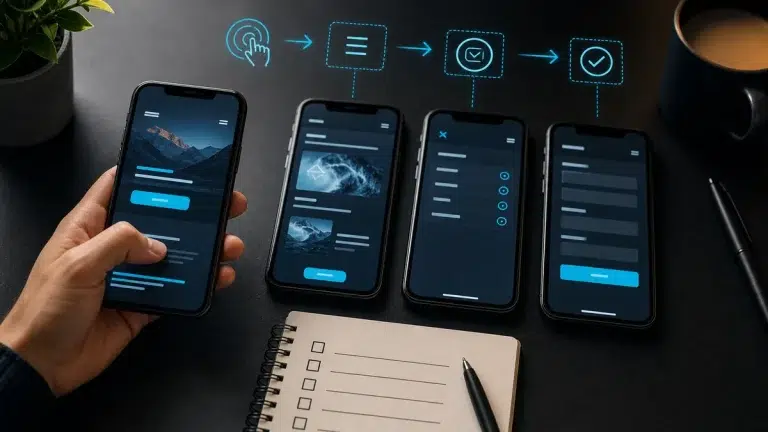
Social media is useful: it helps show the life of a business, talk with customers, and post updates. But it does not fully replace a website: it runs by the rules of a platform you do not own, while a website stays your own digital office.
A customer might find you on Instagram, but they often then need solid information: services, prices, terms, an address, a contact form. On social media, that information quickly sinks into the feed.
Different roles for different jobs

Social media
Shows the life and news of the business and grabs attention, but runs by the rules of an algorithm you do not control.

Website
Explains services, collects enquiries, gets indexed on Google, and gives you stable URLs under your own control.
Where the risk lies
Problems start when a business depends on social media alone: prices are buried in old posts, enquiries get lost in direct messages, the algorithm cuts reach, and the account can be restricted with no warning. A customer who is not on that particular platform sees no information about you at all.
What you can check yourself
- find a service’s price on your profile within a minute
- find the booking terms and the address
- check whether the contact form is easy to find
- make sure your profile links to the website
- compare what is faster to find: on social media, or on the website
When it is better to delegate
Social media matters, but a website gives you a real foundation. The best approach is not to pick one over the other, but to connect them into a clear system: social media grabs attention, and the website turns that into an enquiry, a call, or a booking.
Zen Webmaster can connect your website and your social media so customers never get lost between the two.
Latest posts