Short answer: yes, most of the time you need one. Not necessarily big or expensive, but you need one.
Google Maps, Instagram, Facebook and booking platforms are useful, but they do not replace a website. They give you visibility; a website gives you control: the customer has not walked in yet, but is already deciding whether to trust you, whether you are open right now, whether they can book, and whether the trip is worth making.
What the numbers show
If none of that information appears on a page you actually control, the customer simply picks somewhere else, with no phone call and no explanation. A website matters especially if the restaurant gets tourists, offers online booking, changes its menu often, or sits in a competitive area with several similar places nearby.
Picture a café in a tourist district: bright photos of the dishes on Instagram, but not a word about Sunday opening hours. A tourist finds it through Google on their phone, lands on a page with no address and no booking option, and moves on to the place next door with a clear website. Both have equally good reviews; the only difference is that one has a website and the other only a photo feed.
How a website differs from Google Maps and Instagram
Google Maps helps people find you, but the interface belongs to Google: competitors sit right next to you, the menu can be out of date, and photos are sometimes uploaded by customers themselves, not always flattering ones. Instagram conveys atmosphere and emotion well, but works poorly as a source of facts: opening hours get buried in old posts, and a customer is not going to scroll through the feed to work out whether you are open on a Sunday.
A website is the one place fully under your control: the menu, photos, booking, terms and frequently asked questions look exactly how you want them to, not however a third-party platform allows. It also helps people find you on Google itself, not just in the business listing, but through ordinary search queries too.
What should be on a restaurant’s website
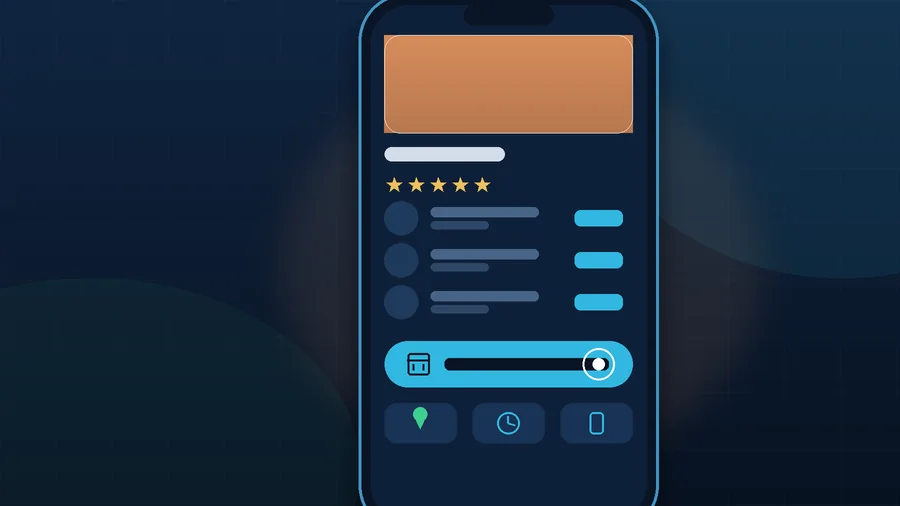
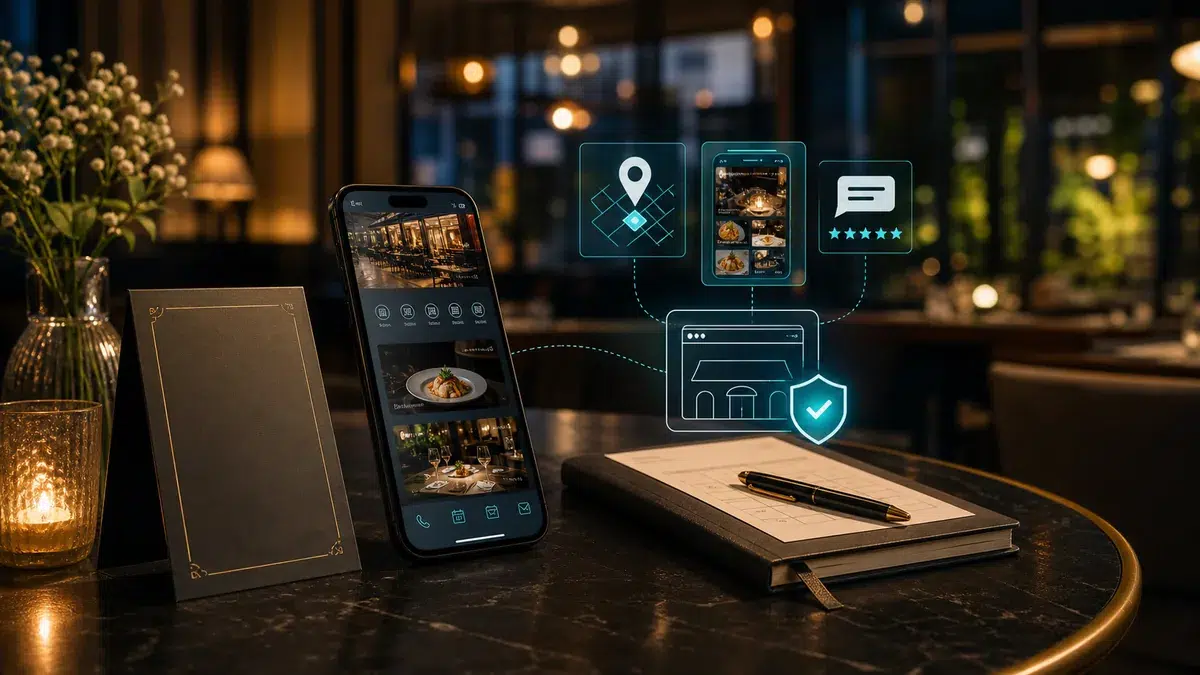
For most cafés and restaurants, a simple, well-kept website is enough. Customers need to find five things quickly: what you offer, when you are open, how to get to you, whether they can book, and whether they can trust you. In practical terms, that means:
- a menu presented in a readable format, not only as a PDF
- up-to-date opening hours, an address and a directions button
- a booking button and a phone number that can be tapped in one go
- photos of the dining room and dishes, plus the terrace and parking if you have them
- the languages that matter if you get tourists
- links to Google Maps and social media
If the restaurant is active on social media, you can add a seasonal menu, news, takeaway or click-and-collect, gift vouchers and an events page. But none of that works unless the site behaves well on mobile: if the menu opens as a heavy PDF, the text is tiny and the booking button is not visible, the customer will not bother working it out; they will simply leave.
How a website takes the pressure off the team
A good website answers the questions that come up again and again before the phone even rings, for example:
- “Are you open tonight?”
- “Is there a terrace, and can we bring the kids?”
- “Can we book online, without calling?”
- “Do you have vegetarian dishes, and where can we park?”
The more of these answers live on the site, the fewer calls come in at the wrong moment, and the less chaos there is during service, especially on a Friday evening when nobody has time to pick up the phone.
Where to start on your own
A restaurant does not always need a large website. To start with, a single, well-put-together page with the menu, opening hours, a booking button and photos is already halfway to a good site. Before placing an order, you can prepare the current menu yourself, 10 to 15 good photos, the address with parking information, and a list of questions guests ask often. That cuts down on back and forth and helps you get a more accurate quote from your provider.
When it is better to delegate
If you decide a website is still worth having, take a look at our full list of services for restaurants and cafes, plus the content management option if you do not have time to update the menu and news yourself.
If you have the time, a simple site can genuinely be put together yourself. But if after a shift you would rather rest than get into WordPress, photos and the mobile version, this work can be handed off. Zen Webmaster can build your restaurant’s website as a calm digital front office: menu, booking, photos, a mobile version and regular updates; you look after the guests, the site stays under control.
Latest posts