
Putting a chatbot on a website takes five minutes these days: you pick a widget, copy the script, paste it before the closing tag. It works, it answers, it looks modern.
The question almost nobody asks during those five minutes: where does everything visitors type into it actually go.
One disclaimer first. I am a webmaster, not a lawyer. What follows is the technical side of the question, with the official guidance. Assessing a specific contract is a lawyer’s job.
What people really write into a chat
Site owners usually picture an exchange along the lines of “what are your opening hours”. In real life, people write into a chat what they would write into a messenger.
Real examples from my clients’ chat logs: full name and phone number, delivery address, order number, a description of a health problem before booking an appointment, a photo of a document. One person sent a scan of an invoice, because “it’s quicker that way”.
That is personal data. Sometimes sensitive data. And it is no longer only with you.
Where it ends up
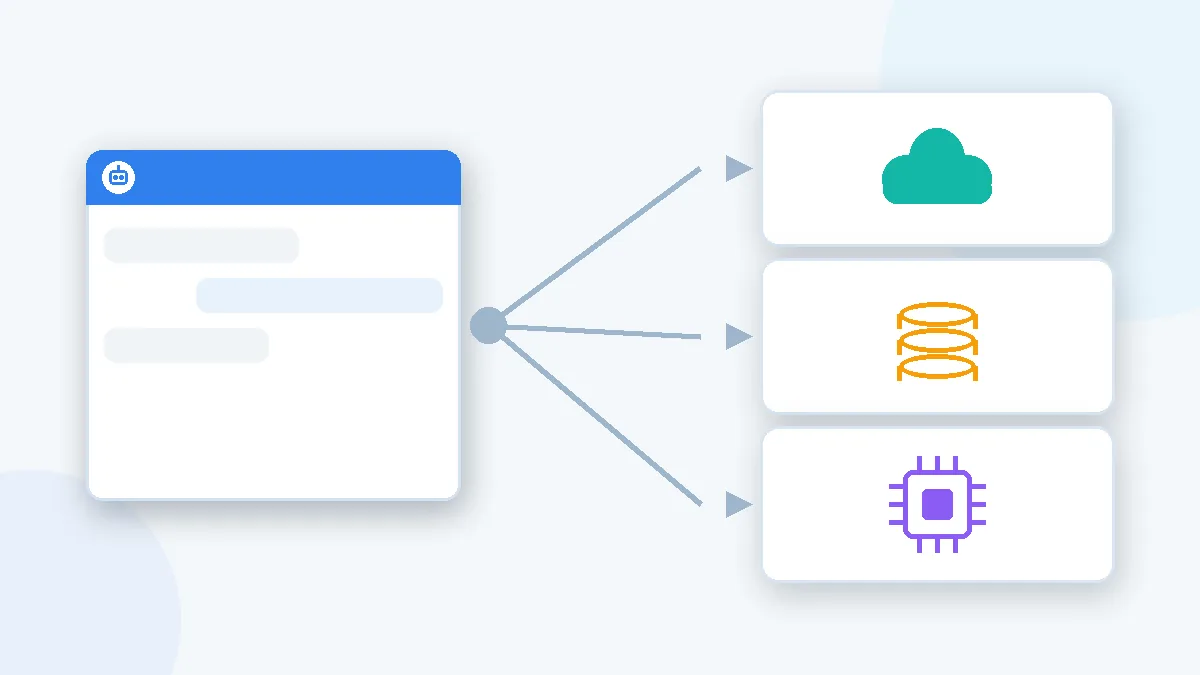
A free or cheap chatbot does not run on your server. The script on your site only draws the window; the conversation itself travels to the provider’s servers. Where those servers are, who has access to them and what happens to the chat history is all written in the terms of service that nobody reads at installation time.
If the chatbot runs on a large language model, a second layer appears: the visitor’s text also travels to the model provider. The chain then has three participants rather than two.
In April 2026 the CNIL published updated guidance on AI and personal data. The main idea is simple: automated processing of personal data through AI does not fall outside the existing rules. There is no separate, gentler regime for AI.
What this means in practice
Three things concern the website owner directly.

Data processing agreement
A third-party service processes your visitors’ data, so the relationship needs a contract. Serious providers keep one in the client area; dubious ones have none at all.

A line in the privacy policy
The visitor has the right to know that a third party handles their messages, which one and why. Not a formality: it is your answer to “who else reads my conversation”.

Tied to the consent banner
If the widget sets cookies or loads before consent, it belongs in the same category as analytics and advertising pixels. Its loading has to depend on the banner.
The neighbouring case: free AI tools
There is a related situation that small businesses fall into even more often than the chatbot story.
Someone copies a customer’s message into a free public AI service and asks it to draft a reply. Or uploads a spreadsheet with the customer base to “add it up quickly”.
In free public versions the data can normally be retained and used for further training of the model, unless the terms explicitly say otherwise. Which means the customer’s data has left your control, and you remain accountable for it.
Working practice looks like this:
- for work tasks, use the business versions of these services, where the contract states that data is not used for training;
- before sending anything, strip out what identifies a person: name, phone number, address, contract number;
- do not upload whole databases, exports or scans of documents;
- for high-risk cases - HR, legal or health data, heavy work with the customer base - run a data protection impact assessment first.
That last point sounds heavy, but the idea is down to earth: before you automate the processing of sensitive data, sit down and think through what happens if it leaks.
What to check on your own site
- Is there a chat, a support widget or a pop-up with automated replies.
- Do you know which service it is and who the provider is.
- Do you have a data processing agreement with them.
- Is it mentioned in the privacy policy.
- Does it load before the visitor consents in the cookie banner.
- Who on your side has access to the conversation history, and do they need it.
- How long the history is kept and whether deletion can be scheduled.
Points two to five are usually where the problem surfaces: the widget was installed long ago, nobody remembers by whom, there is no agreement, and the privacy policy does not mention it either.
When to call a specialist
Checking whether there is a chat on the site and rereading your own privacy policy is something you can do yourself. After that the technical part starts: working out which scripts actually load on the page, where they send requests, which cookies they set, whether they are tied to the consent banner and whether anything breaks once you tie them to it.
On the sites where I have done this, I usually found two or three forgotten third-party scripts the owner knew nothing about. The chat was only one of them.
If you have the time and the inclination, part of this check is fine to do yourself. If you would rather run your business than work out which widget a contractor inserted three years ago, I can take the technical part: I look at what is running on the site, where the data goes and what needs fixing.
Sources and data date: CNIL guidance on AI and personal data, April 2026; Regulation EU 2024/1689 (AI Act), Article 50, applicable from 02.08.2026. Data verified on 17.08.2026.
Latest posts